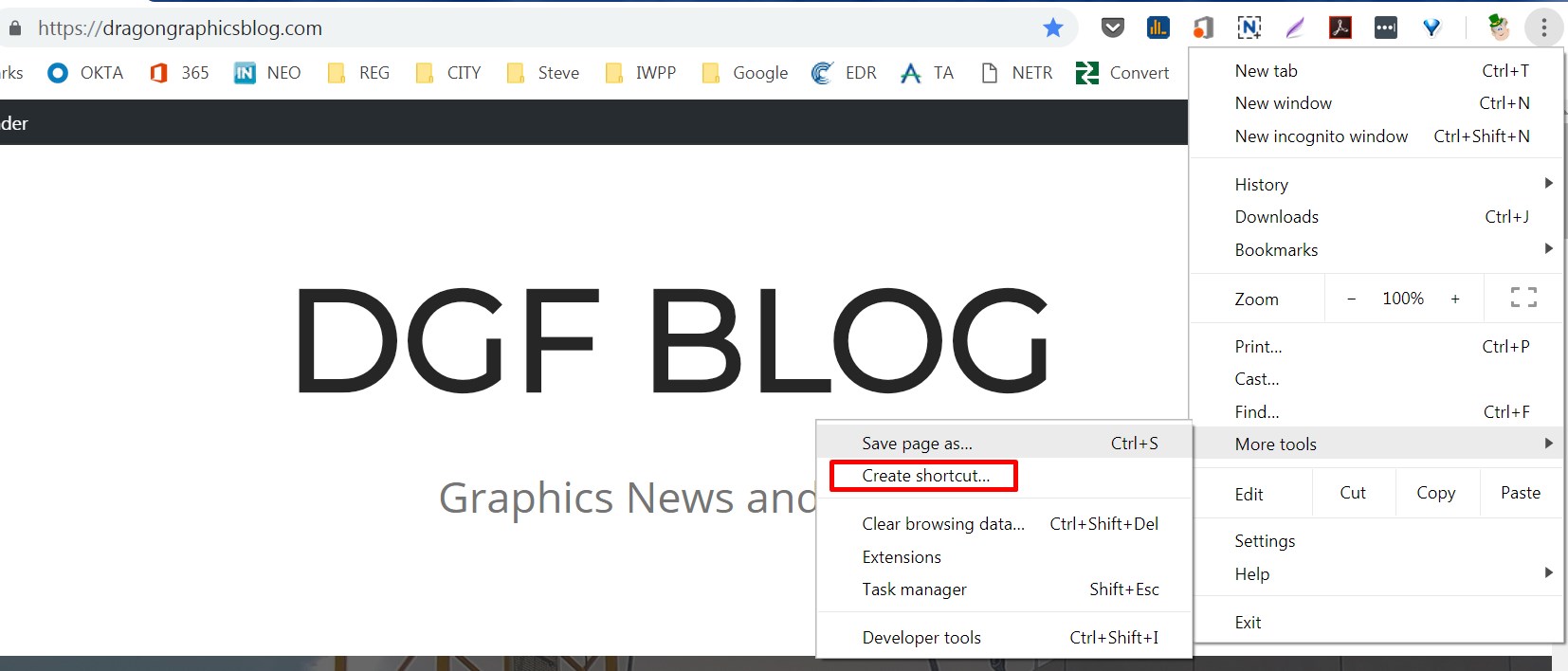
Create a shortcut in Chrome for your desktop as you normally would.
Make sure to check the “Open as window” if you want it to open in it’s own window.
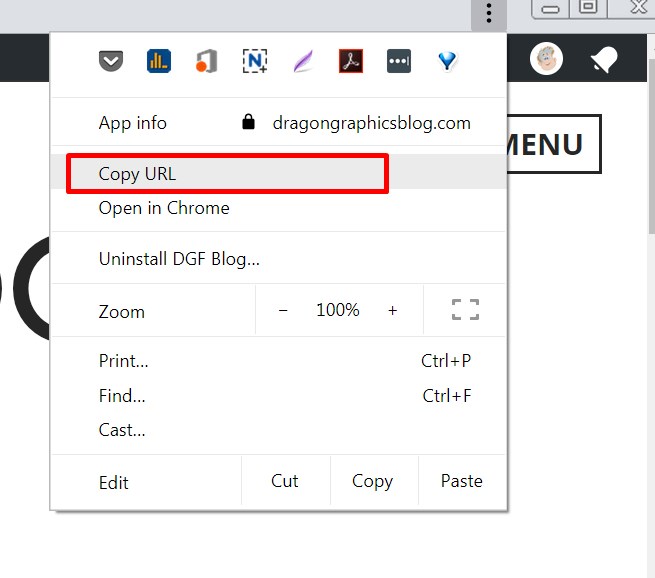
When the window opens click the 3 vertical dots and then click “Copy URL”
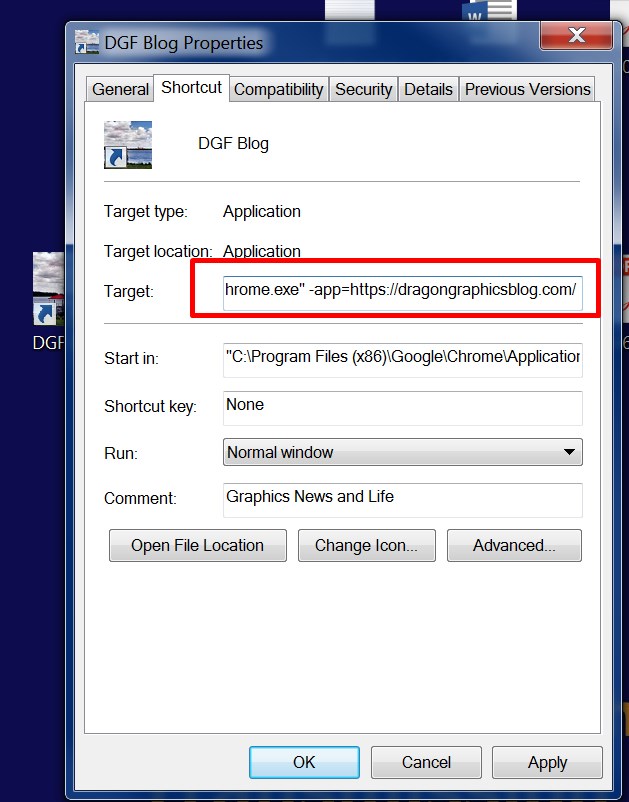
Right click on your new shortcut and select “properties”. Add a space then “-app=” and then paste your url. Mine looks like this: -app=https://dragongraphicsblog.wordpress.com/. The entire link is as follows: “C:\Program Files (x86)\Google\Chrome\Application\chrome.exe” -app=https://dragongraphicsblog.wordpress.com/
Flagler County has an interesting and greatly varied agriculture. Not only is the soil adapted to a large number of different crops, but the year round growing seasons makes it possible to grow from two to four crops on the same ground during the same year. Flagler county farmland never lie idle. Fall, winter, spring or summer, each brings it season for planting the crop best suited to its particular growing conditions.
Beginning with the fall season, ground is usually prepared for string beans, fall crop Irish potatoes and turnips about the last days of August. The beans and turnips; early in September. Closely following these, planting of beets, peppers, cabbage, cauliflower, onions, lettuce and celery can be made, sowing the seed in seed beds with special care and attention can be given to them.
Carrots can be planted in field rows about the middle of September. Toward the end of this month is a good time to begin setting strawberry plants as they bear earlier if given a good start early in the season. Field plantings of English peas may also be made towards the end of September. Rape for winter pasturing calves, hogs and cows, and for chickens is planted at this time.
In November and December many of the October plantings of truck can still be made, particularly such crops as lettuce, celery, cabbage, onions, cauliflower, spinach, English pears, beets, turnips and carrots, all of which it is best to grow successive crops thus taking advantage of a wide range of markets. Sugar cane stalks are sometimes planted during November but do not sprout until the following spring. Citrus and other fruit trees are planted during December with good results.
January brings the time for planting the early Irish potato crop, at present the most important cash crop of Flagler County. The best time of the month for planting is from the tenth to the twelfth although sometimes plantings made as late as the first week of February are successful.
Orange, tangerine and grapefruit trees as well as grapes, peaches, persimmons, pecans, figs, guavas, and other fruits are planted during January and February. The establishment of a Bermuda or Carpet grass pasture seeded with Lespedeza may be undertaken during January or February.
About March first the spring planting seasons opens. Sweet com is the first crop planted after the potato crop and may be planted as early as February twentieth. Watermelons, cucumbers, string beans, tomatoes, squash, egg plant and early sweet potatoes are about the principal cash crops planted during the month of March. Field com, soy beans, sunflowers, pumpkins, sorghum and sugar cane are also planted this month. Citrus and other fruit trees may still be put out.
In April, a number of the winter crops are out of the way and this ground is now in fine rice, cow peas, soy beans, velvet beans, the sorghums, okra, collards, butter beans, and summer spinach, as well as several desirable varieties of cow peas for table use.
During May, June and July, the land not already occupied by sugar cane, sweet potatoes, com and cow peas, rice or velvet beans can be planted to either cow peas or sweet potatoes up to August 1st.
by L. T. Nieland, bunnellfestival.org
July 29, 2018


















You must be logged in to post a comment.